
Introduction
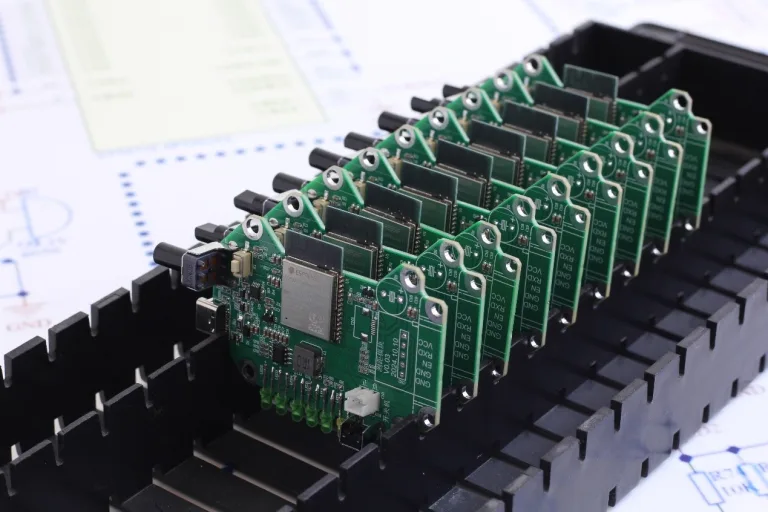
Most printed circuit boards (PCBs) used in electronic products are green — but why?
This color choice isn’t just about aesthetics. It reflects practical considerations in manufacturing, visual ergonomics, safety, and long-standing industry traditions.
1. Manufacturing Cost Advantage
Green solder mask ink has been the most commonly used in the PCB industry for decades.
Due to mass production and mature supply chains, it’s the most cost-effective and reliable option for large-scale manufacturing.
2. Process Compatibility
(1) Better Light Transmission and Development
Green solder mask provides high light transmittance, ensuring more consistent exposure and development processes with fewer defects.
(2) Optical Alignment and Detection
In yellow-light cleanrooms, the green background contrasts sharply with copper traces, improving precision for SMT placement and AOI inspections.
3. Visual Performance and Maintenance
- High Contrast: Green boards provide strong visual contrast against metal pads and white silkscreen, aiding inspection.
- Reduced Eye Strain: Green is less fatiguing for the eyes during long inspection sessions.
- Easier Repairs: The color makes defects and trace paths more visible, simplifying maintenance.
4. Safety and Environmental Benefits
Green solder mask contains no conductive elements like cobalt or carbon, minimizing short-circuit risks.
It’s also more environmentally friendly, emitting fewer harmful gases at high temperatures.
5. Industry Tradition and Standardization
Since the mid-20th century, green PCBs have been adopted by major manufacturers and gradually became an industry standard.
The color’s stability, readability, and manufacturing compatibility helped it dominate the market.
6. The Rise of Colored PCBs
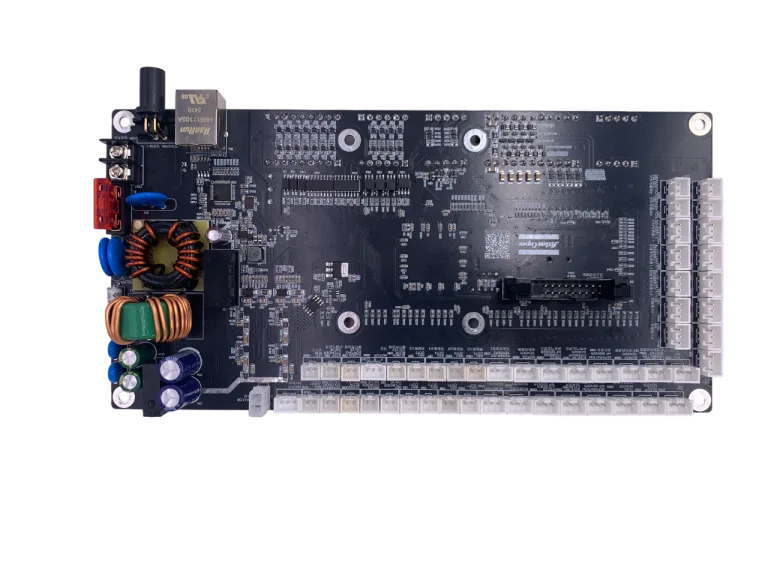
Modern technology allows PCBs to be produced in many colors — red, blue, black, or even white.
Designers often select colors that match branding or product identity to highlight creativity and aesthetics.
7. Color Does Not Affect Performance
A common misconception is that black PCBs perform better.
In reality, PCB quality depends on the base material, copper thickness, trace precision, and fabrication process, not on the color.
8. Conclusion
The popularity of green PCBs stems from a balance of cost efficiency, process maturity, visual comfort, and environmental compliance.
While colorful PCBs are now available, green remains the most trusted and practical industry standard.